The power of community
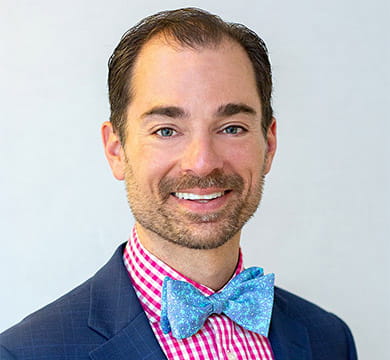
“When you focus on creating community, what you’re able to accomplish together is much more powerful.” That’s the guiding belief of Reid Beyerlein, a financial advisor who’s spent his career not only helping clients reach their goals but also building spaces where people feel seen, supported and connected. Whether that’s helping a kid down the street learn something new or creating an organization where like-minded individuals can come together to share their experiences, he believes it’s a blessing to be able to give back.
That commitment hasn’t gone unnoticed. Reid was recently honored with the Pride Month Gamechangers Award* and celebrated by the Detroit Red Wings and Detroit Tigers for the positive impact he’s made in his community. We sat down with him to explore how his journey from charting stocks on green graph paper to founding a thriving LGBTQ+ business network has been shaped by the people around him and his unwavering commitment to giving back. He shared how people have helped shape his career journey and how he’s striving to make a meaningful mark on others.
Q: What first sparked your interest in finance?
A: When I was really young, the principal at my elementary school lived down our street with her family. And I would do anything to make money in the summer, so I would be down there cutting their grass or watering their flowers. This was back in the ’80s. Her husband was an independent advisor and accountant, so we would watch and plot stocks together. This was before computers; I would chart them on green graph paper I called green sheets. As an aside, he taught me how to handicap horse racing too. I was really good at it! He would bring the brochure home from the racetrack and we’d see how I did.
Q: Was finance a direct path for you?
A: No, when I graduated from college, I went to work with the family business in construction fasteners. We sold to a lot of big suppliers, including those responsible for constructing the Metro Detroit Airport and Tiger Stadium. But the construction industry in Michigan got hit hard in the early 2000s, so my family’s company merged with another company. My role was going to shift from managing internal programs, including our pension program and 401(k), to strictly being outside sales – and I wasn’t interested in doing that. People say do not let your hobbies become your career, but it turned out wonderfully for me.
Q: How is advising different than the construction business?
A: In construction, you get instant gratification. I would get fulfillment from seeing a building go up on what used to be a vacant property. What we do as advisors is not instant gratification; we have to diligently plan for a long period of time. But the payoff is rewarding. I have clients that attend local car shows with their dream vehicles and say, “Reid, thank you. Because you helped us get here.” I’ve been doing it long enough now that I get to see that it’s worth all the hard work, helping clients reach their goals and dreams.
Q: How has the advisor role changed over time?
A: When I started, I was dialing for dollars. I’d call with a stock pitch or bond pitch. Mutual funds were around but not as prevalent as today. We were just making a career out of making good investments. Today, we’re making good choices to last a lifetime. We teach clients to not only do well today but talk about those dreams and goals for the future, including passing wealth to the next generation. Clients have realized that they don’t want to just pick and buy stocks; advisors can help them secure a lifestyle – that’s very different.
Q: When did you notice the industry shift?
A: At my previous firm, I was very open and honest with my supervisor and told him, “I’m going to target the LGBTQ+ community. I’m gay, and I think we need these services.” At the time, he told me I was going to be a failure if I did that. He said it wasn’t a community to go after. This was a critical error, in his thinking. I said, “I’m going to prove you wrong.” This was 20 years ago now, and times were different. But those words would never come out of my mouth to anyone. It gave me extra fuel to become wildly successful. I knew it was time to find a firm with a culture that aligned better to my values.
Q: What do Raymond James’ inclusion networks mean to you?
A: It shows that the firm has your back, regardless of what’s going on in the world. It’s really important that our organization and our leaders understand and get it right. The inclusion networks give us a place to talk openly and honestly. I’m not in an office with a bunch of other advisors, so having these networks gives us a sounding board to bounce ideas off each other and create those synergies that help support our businesses.
I was invited to join the Pride Financial Advisors Network (PFAN) Council, and I couldn’t turn down the opportunity to share my ideas and perspectives. I want to see Raymond James continue to be successful because I plan to be here for the rest of my career.
Q: Why is local involvement so important to you?
This really comes down to my belief system that if you are fortunate to have, then it’s your duty to give back. I have a wonderful life and a great career, and I want to help my community succeed. That’s just something I live by. I have told prospects that if I’m not the right advisor for them, then they should find someone who is involved locally. An advisor who’s involved in the community brings credibility and trust.
This philosophy goes back to when I was much younger and started an organization called Ties Like Me! I recognized there wasn’t a Chamber of Commerce-type organization for the LGBTQ+ community. The group is still going strong today, with about 100 people in attendance at every monthly meeting and over 2,000 people on our email list. It’s shifted from a strict business gathering where people wore suits and ties to a more social event with a business networking element. It became more successful than I could’ve imagined from what started as an idea for a fun way to get to know people in the community.
*This ranking is not based in any way on the individual's abilities in regard to providing investment advice or management. This ranking is not indicative of advisor's future performance, is not an endorsement, and may not be representative of individual clients' experience. Raymond James is not affiliated with the Detroit Red Wings, Detroit Tigers or Comerica Bank.
To learn more about how Raymond James embodies inclusivity in our culture and about our inclusion networks, visit.
Follow along on social media with #RJPFAN.